Common Questions About Suppressors Answered
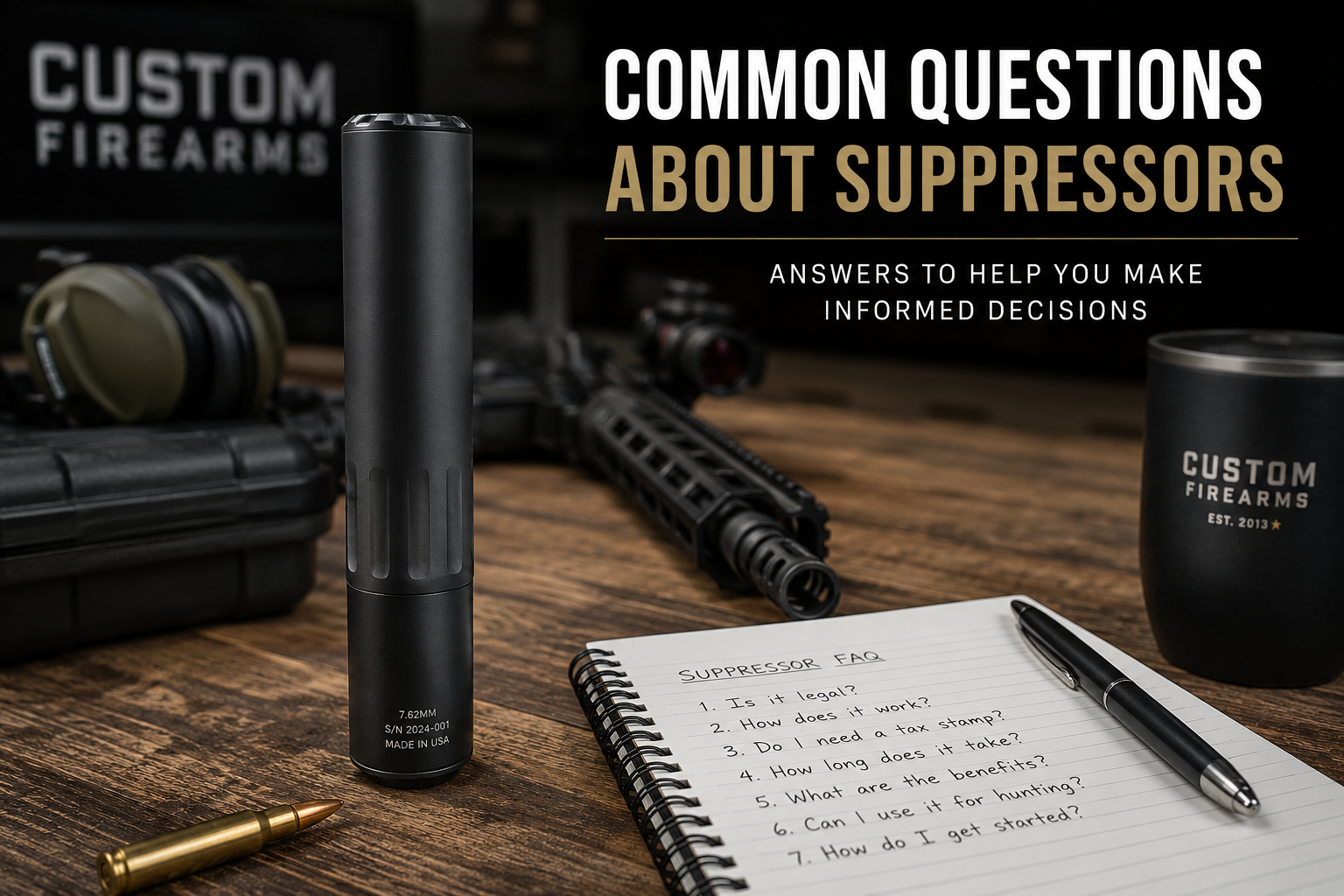
Suppressors have become increasingly popular among recreational shooters, hunters, and firearm enthusiasts. Despite their growing use, there are still many misconceptions about what suppressors are, how they work, and the legal process for owning one.
This guide answers some of the most common questions to help you better understand suppressor ownership and the NFA transfer process.
What Is a Suppressor?
A suppressor is a firearm accessory that attaches to the muzzle of a firearm to reduce the sound and muzzle blast produced when a shot is fired. While often called a “silencer,” suppressors do not make firearms silent. Instead, they help reduce noise to a safer and more comfortable level.
Many shooters use suppressors to improve their shooting experience by reducing noise, recoil, and muzzle flash.
Are Suppressors Legal?
Suppressor laws vary by state. In many states, suppressors are legal to own if all applicable federal and state laws are followed. Some states prohibit civilian ownership altogether.
Before purchasing a suppressor, always confirm that ownership is legal in your state and local jurisdiction.
Why Do People Use Suppressors?
Suppressors offer several practical benefits, including:
- Reduced noise at the shooter’s ear
- Less felt recoil
- Reduced muzzle flash
- Improved communication while shooting with others
- Enhanced comfort during extended range sessions
Hunters and recreational shooters often choose suppressors because they make shooting more enjoyable while helping reduce exposure to loud noise.
Do I Need a Background Check?
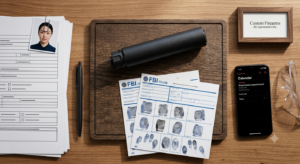
Yes. Purchasing a suppressor requires compliance with federal regulations, including a background check and approval through the Bureau of Alcohol, Tobacco, Firearms and Explosives (ATF).
The required paperwork must be completed before you can legally take possession of the suppressor.
What Is an NFA Transfer?
Suppressors are regulated under the National Firearms Act (NFA).
Unlike a standard firearm transfer, acquiring a suppressor requires additional paperwork and federal approval before the item can be transferred to the buyer.
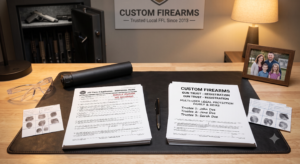
A qualified Class 3 SOT dealer can guide customers through the required documentation and transfer process.
How Long Does the Approval Process Take?
Approval times vary and are determined by the ATF. Processing times can change over time based on application volume and other factors.
Your dealer can help ensure your paperwork is complete and submitted correctly, but approval timelines are outside the dealer’s control.
Can I Purchase a Suppressor Online?
Yes. Many customers purchase suppressors from online retailers.
The suppressor must be shipped to a licensed dealer authorized to handle NFA items. Once it arrives, the required paperwork and approval process must be completed before the suppressor can be transferred to you.
What Should I Bring to My Appointment?
Requirements may vary depending on your purchase and applicable laws. Your dealer will let you know what documentation you’ll need before your appointment to help ensure the process goes smoothly.
Why Work With a Local Dealer?
Working with a local dealer offers several advantages:
- Personalized guidance throughout the process
- Assistance with required paperwork
- Local support if you have questions
- Convenient appointment scheduling
- Professional service from start to finish
A knowledgeable dealer can help make the process easier to understand while ensuring all required steps are completed correctly.
Looking Ahead at Custom Firearms
Custom Firearms is currently working toward offering NFA services, including suppressor transfers, once our Class 3 Special Occupational Tax (SOT) license is approved.
Our goal is to provide a convenient local option for customers seeking professional guidance and reliable service throughout the NFA transfer process.
Stay tuned for updates as these services become available.
Have Questions?
If you’d like to learn more about firearm transfers or upcoming NFA services, contact Custom Firearms. We’re committed to providing professional, knowledgeable, and personalized service while helping customers navigate the process with confidence.
Disclaimer: This article is provided for general informational purposes only and is not legal advice. Firearm and suppressor laws vary by jurisdiction and may change over time. Always ensure you comply with all applicable federal, state, and local laws.
Add comment