Individual vs. Gun Trust: Which Is Best for Your First Suppressor?
It looks like you want the complete, ready-to-publish content for the blog post we just outlined. Below is the final version of the post, fully polished and formatted with clean Markdown. You can copy and paste this directly into your WordPress editor.
Individual vs. Gun Trust: Which Is Best for Your First Suppressor?
If you are diving into the world of National Firearms Act (NFA) items and looking to buy your first suppressor, congratulations! Silencers are incredible tools for hearing protection, reducing recoil, and making your time at the range significantly more enjoyable.
However, once you decide on the right model, you face a major legal choice on your ATF Form 4 application. You must choose how you want to register the item: as an Individual or through a Gun Trust.
It’s one of the most common questions we get here at Custom Firearms, and making the wrong choice can limit how you use your property down the road. Let’s break down exactly how they compare so you can make the best choice for your situation.
1. Registering as an Individual
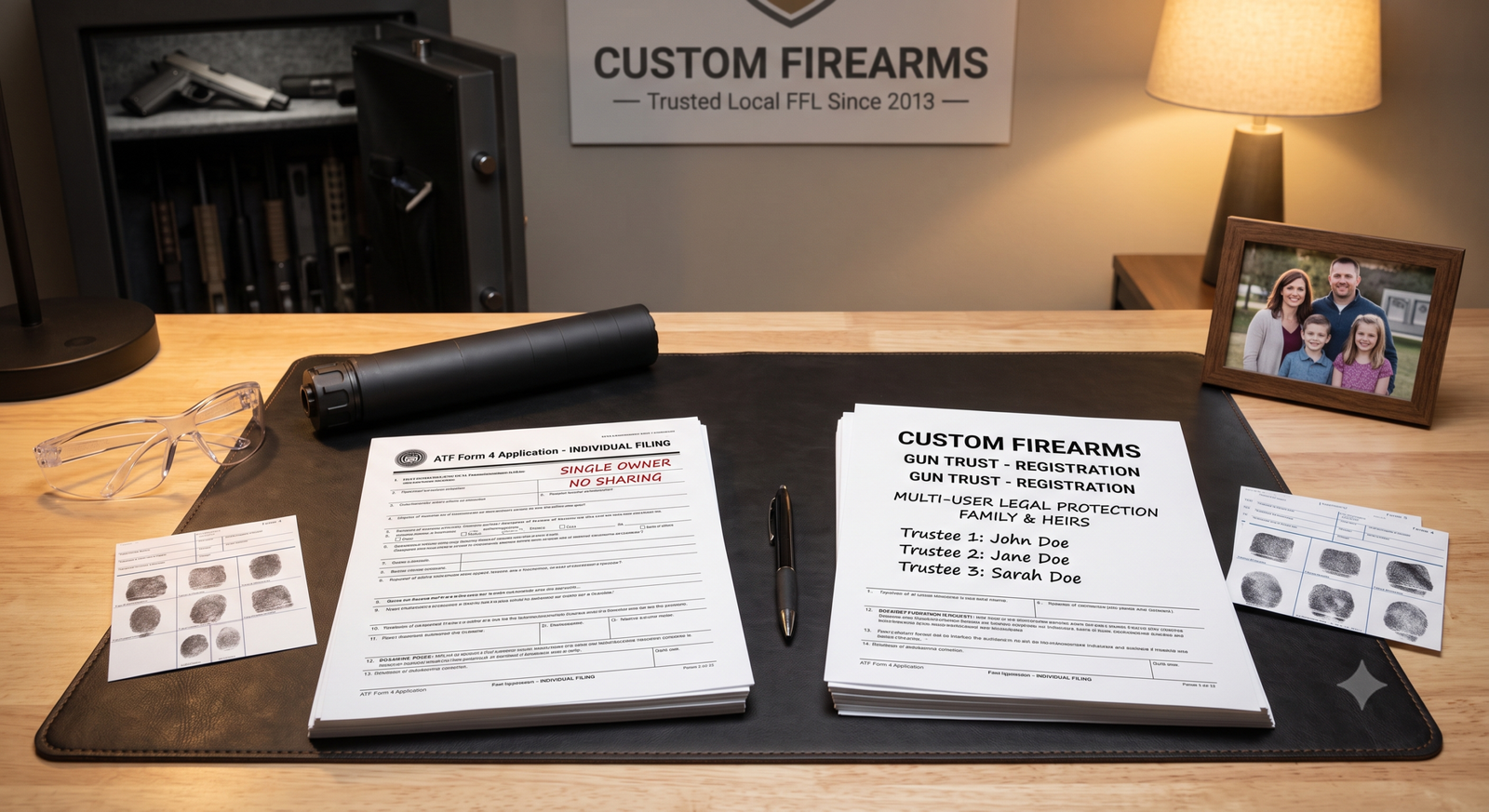
Registering as an individual means the suppressor belongs strictly to you and you alone. Your name, fingerprints, and photograph are tied directly to that specific serial number in the ATF registry.
The Pros:
-
Simplicity: There is no extra legal paperwork to draft or pay for upfront. You simply fill out the Form 4, submit your details, and wait for approval.
-
Slightly Faster Initial Setup: Because you don’t have to submit trust documentation, the initial filing process has fewer moving parts.
The Cons:
-
Zero Sharing Allowed: This is the biggest drawback. Legally, you must be physically present whenever someone else is using or is in possession of the suppressor. If you leave it at home and your spouse, sibling, or friend has access to the safe where it’s stored, that is technically an illegal NFA transfer.
-
Inheritance Issues: When you pass away, an individual NFA item must go through a complex estate process (via an ATF Form 5) to be lawfully transferred to your heirs.
2. Registering via a Gun Trust
An NFA Gun Trust is a legal entity established specifically to hold title to firearms and regulated accessories. The trust technically owns the suppressor, and you manage the trust.
The Pros:
-
Lawful Sharing: A trust allows you to name “Co-Trustees.” Anyone listed as a trustee can legally possess, transport, and use the suppressor independently. This is ideal if you want your spouse, family members, or trusted shooting partners to be able to use the silencer without you being there.
-
Easy Estate Planning: You can easily designate “Beneficiaries” who will inherit the NFA items upon your passing. The transfer happens smoothly and legally without the typical probate headaches.
-
Future Flexibility: You can add or remove co-trustees over time as your life, family dynamic, or shooting circles change.
The Cons:
-
Upfront Setup: You do have to pay to have a valid Gun Trust drafted (though affordable, specialized legal templates are widely available online).
-
More Paperwork on Future Buys: When a trust applies for a new NFA item, every responsible person (all current co-trustees) must submit their fingerprints and photographs to the ATF. (Pro-tip: Keep your trust simple with just you on it when buying, and add trustees later!)
The Verdict: Which One Should You Choose?
| If you want… | Choose… |
| The absolute lowest upfront cost and don’t care about sharing | 👤 Individual |
| To let family use it, protect your heirs, and have long-term flexibility | 📜 Gun Trust |
💡 The Bottom Line: If you view buying a suppressor as a lifelong investment that you eventually want to pass down to your kids, or if you simply want your spouse to be able to take it to the range, a Gun Trust is almost always the superior choice.
Ready to Get Started?
Navigating ATF paperwork can feel overwhelming, but it doesn’t have to be. At Custom Firearms, we provide private, one-on-one guidance to walk you through your FFL and NFA transfer processes right here locally, completely free of big-box retail crowds.

Add comment